RODAC contact plates for microbiological surface monitoring
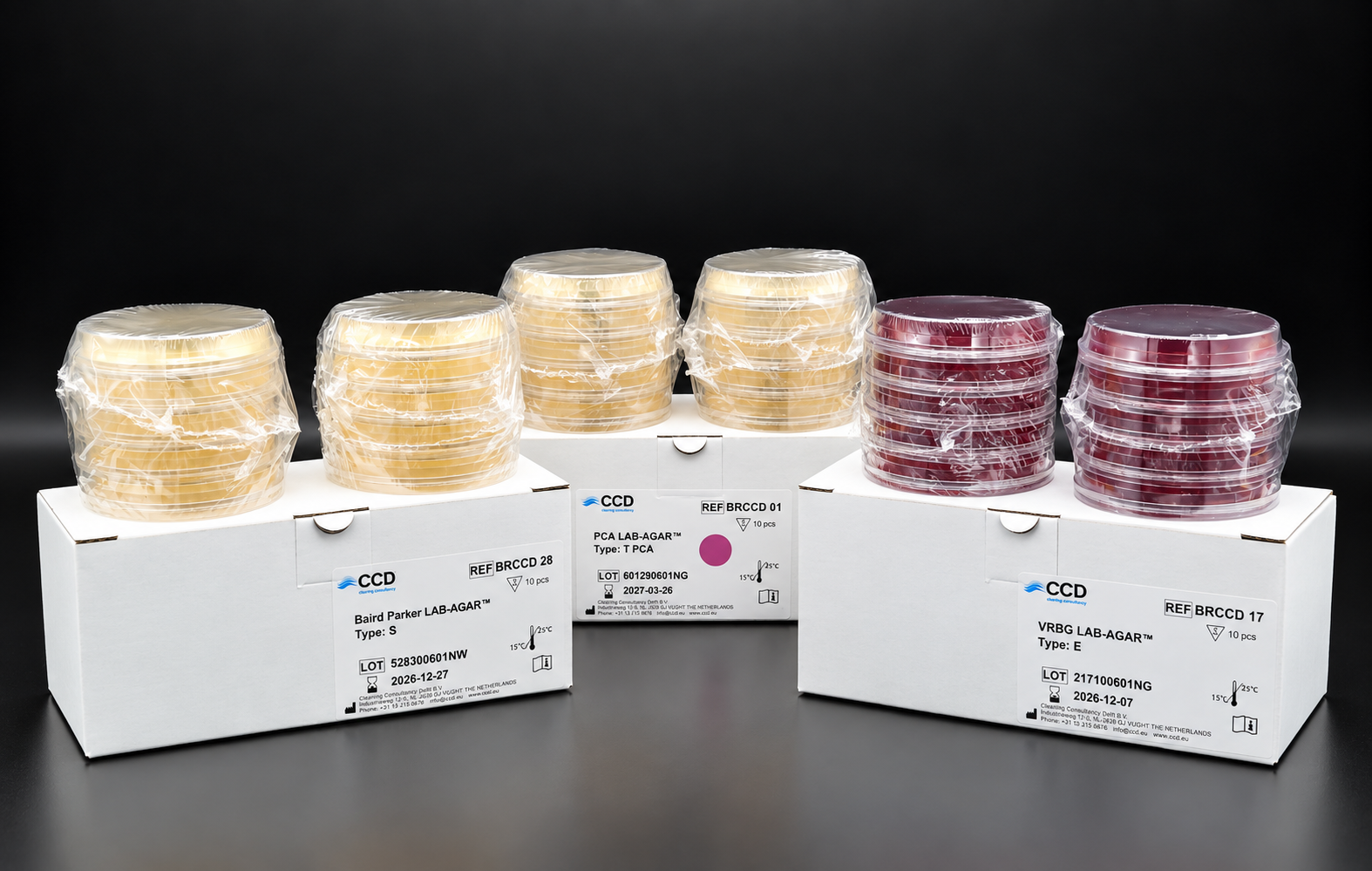
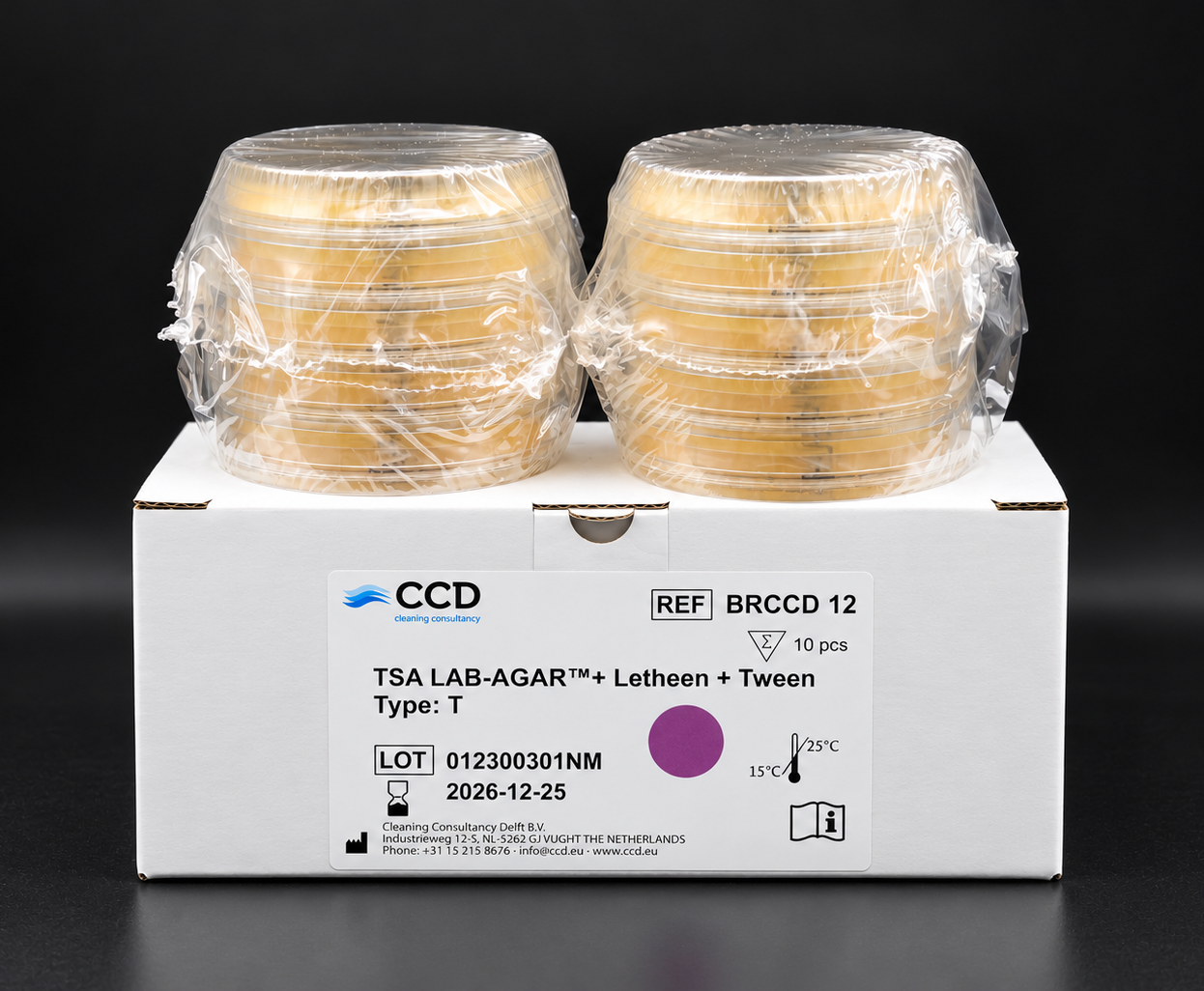
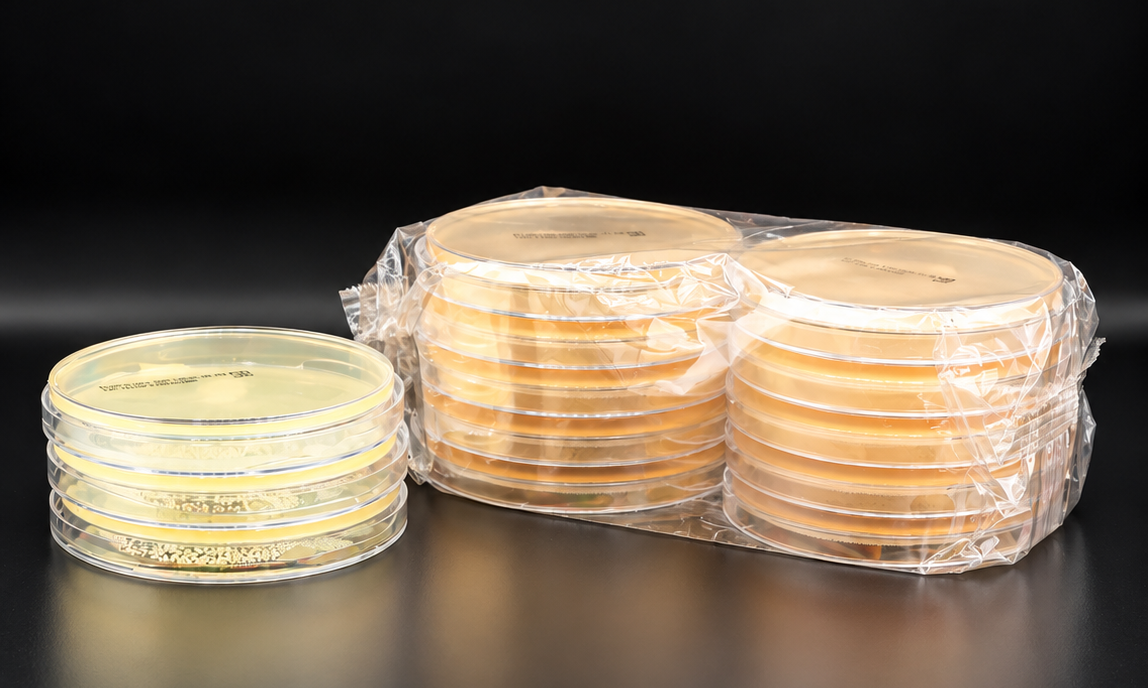
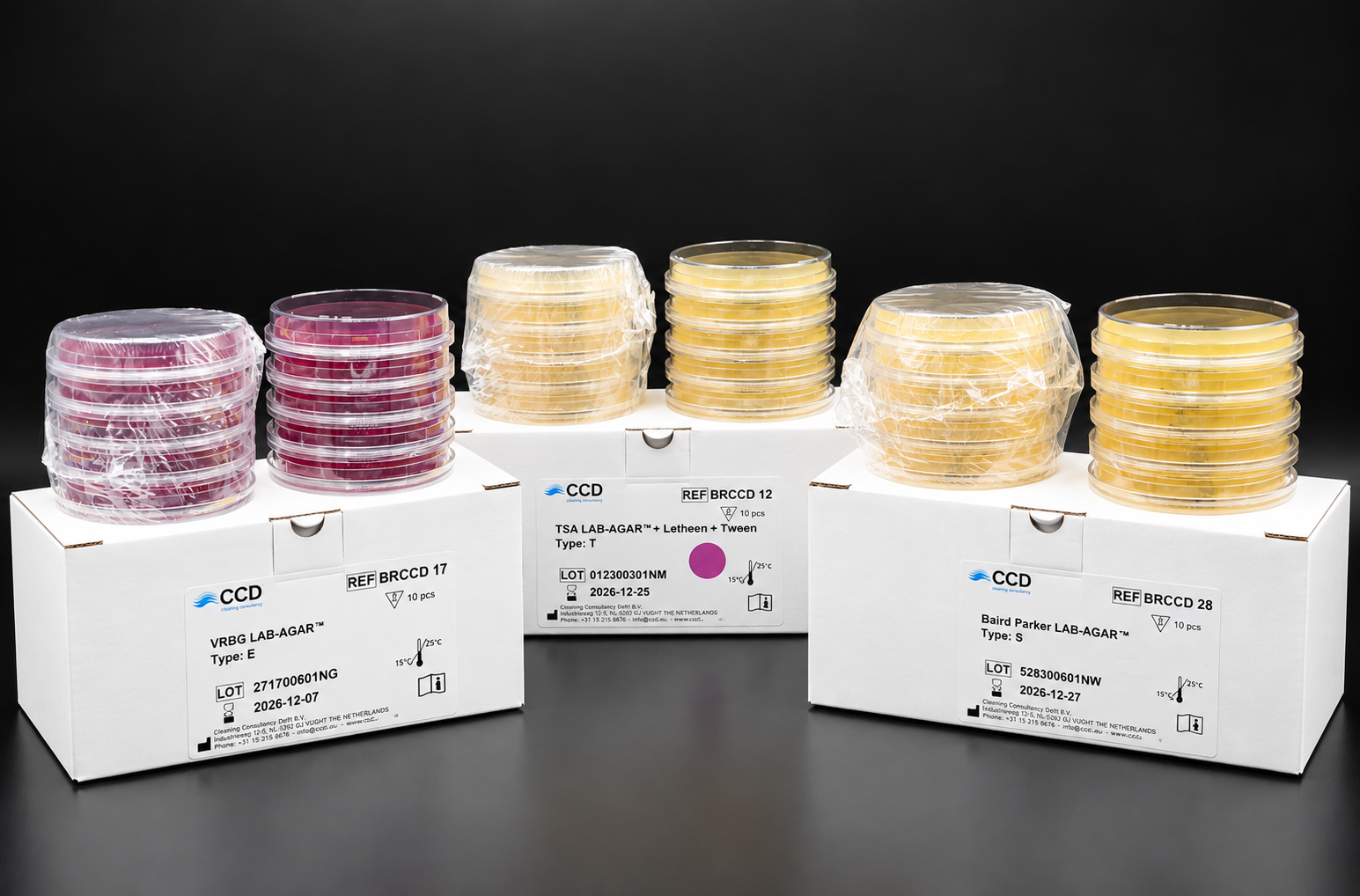
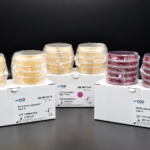
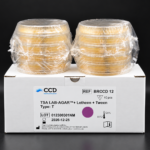
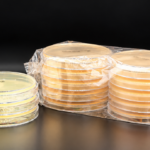
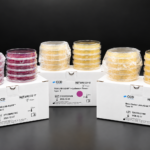
RODAC contact plates are used for rapid microbiological checks of flat, hard surfaces.
After incubation, you assess the microorganisms that have grown.
- For work tables, machinery and transport equipment
- Check before and after cleaning or disinfection
- Advice on culture medium and sampling setup
Not sure which contact plate is suitable?
CCD can advise on the right RODAC contact plates for your application.
Ask for advice on the right RODAC contact plates for your application.
Op voorraad

ISO certification
ISO 9001:2015 certified

A unique position
Consulting firm in the Netherlands and Belgium

Founded in 1991
Industrial cleaning
Product description
What are RODAC contact plates?
RODAC contact plates, also known as contact plates, contain a raised agar surface for microbiological surface monitoring. Remove the lid, press the agar gently and straight onto the surface to be tested, then replace the lid.
After incubation, microorganisms become visible as individual colonies. Record the result as CFU per plate and compare it with previous measurements, comparable sampling locations and the alert, action or acceptance limits in your sampling plan.
RODAC contact plates are mainly suitable for flat, hard, relatively smooth and accessible surfaces, such as work tables, machinery, equipment, transport equipment and other hygiene-critical contact points. For crevices, curved or rough parts, pipes, small components and porous materials, sterile swabs or sponge sampling are often more suitable.
Using fixed sampling locations, a consistent method and comparable sampling times makes results suitable for trend analysis and for assessing cleaning and disinfection.
Where are RODAC contact plates used?
RODAC contact plates are used for microbiological monitoring of hygiene-critical, flat and accessible contact points. The appropriate sampling locations, culture media and sampling frequency depend on your process, risk assessment and monitoring objective.
Industrial laundries and textile services

In industrial laundries, RODAC contact plates are commonly used to verify the microbiological
quality of processed textiles and to monitor critical contact points. Typical sampling locations
include roll containers, transport trolleys, work tables, folding and finishing equipment, and
drying equipment.
Sampling at fixed locations and consistent intervals provides a useful picture of hygiene
performance. It helps you assess cleaning and disinfection measures, monitor trends and
investigate potential recontamination risks.
For textile and laundry monitoring, total viable count, Enterobacteriaceae and Staphylococcus aureus are commonly assessed together. Where yeasts and moulds are also relevant, monitoring can be extended to include YGC or Sabouraud Dextrose Agar.
This type of microbiological verification can support a wider laundry hygiene management system, including EN 14065 RABC (Risk Analysis and Biocontamination Control), quality assurance programmes and certification preparation. For international textile-service markets, it also supports the evidence-based process control expected for hygienically clean textiles.
Hatcheries

In hatcheries, microbiological monitoring helps maintain oversight of hygiene around hatching
eggs, chicks, work materials and installations. Effective cleaning and disinfection reduce
microbial contamination, but periodic sampling confirms whether the process is delivering the
intended results in practice.
RODAC contact plates are suitable for flat and accessible contact points such as work tables,
door handles, candling tables, egg trays, transport components and parts of hatching equipment.
For rough, curved, wet or difficult-to-reach areas, sterile swabs or sponge sampling are
normally more appropriate.
By using fixed sampling locations and comparable sampling times, you can compare results,
identify deviations earlier and follow up on corrective actions in a structured way.
Cleanrooms, pharmaceutical and controlled environments
In cleanrooms, pharmaceutical facilities and other controlled environments, contact plates are used for microbiological surface monitoring. They are suitable for flat surfaces such as workbenches, equipment, doors, materials and relevant contact points. Depending on the monitoring programme, gloves or garments may also be sampled.
The value lies not in a single isolated result, but in a consistent and reproducible method. Define sampling points, frequency, culture medium, incubation conditions, assessment criteria and alert or action limits within your environmental monitoring programme.
For controlled handling, our TSA and PCA plates are double wrapped. This allows the outer
packaging to be removed step by step before the plate enters a controlled area. TSA and PCA
plates are also gamma irradiated.
Food production and processing environments
In food production, RODAC contact plates can be used to check critical surfaces that may affect product hygiene and cross-contamination control. Examples include work tables, machinery, conveyor belts, filling and packing lines, tools, cold rooms and frequently touched contact points.
Contact plates work best on flat, hard and accessible surfaces. Sterile swabs are usually more suitable for grooves, edges, porous materials and small components. Both methods complement each other within a practical hygiene monitoring plan.
Healthcare, laboratories and medical environments
In healthcare and laboratory environments, contact plates can be used to monitor workbenches, equipment, transport equipment and other hygiene-critical contact points. The appropriate culture medium depends on the objective of the monitoring, the type of environment and the microorganisms of concern.
Plan sampling in line with internal procedures, risk assessments and any applicable sector requirements. CCD can help select an appropriate culture medium and practical sampling method.
Industrial cleaning and technical production
In industrial cleaning and technical production, RODAC contact plates can help verify whether a cleaning or disinfection step achieves the required result. Sample before and after cleaning on work surfaces, machinery, transport equipment, tools, components or product-contact surfaces.
By sampling the same locations under comparable conditions, the results can be used for trend analysis and investigating deviations.
Which RODAC contact plate do you need?
| Culture medium | Main use | Suitable applications |
|---|---|---|
| TSA or PCA — total viable count | General assessment of microbiological hygiene on a surface | Textile and laundry monitoring, hygiene-critical production areas and relevant contact points |
| VRBGA — Enterobacteriaceae | Targeted detection and assessment of Enterobacteriaceae | Textile and laundry monitoring, hygiene-critical production areas and relevant contact points |
| BPA — Staphylococcus aureus | Targeted detection and assessment of Staphylococcus aureus | Textile and laundry monitoring, hygiene-critical production areas and relevant contact points |
| YGC or Sabouraud Dextrose Agar — yeasts and moulds | Detection and assessment of yeasts and moulds | Textile and laundry monitoring and moisture-sensitive production, storage and work environments |
| Other culture media | Detection of specific microorganisms or use of selective, differential or neutralising media | Specific investigations in cleanrooms, hygiene-critical production, laboratories and process control |
| 90 mm Petri dishes | Air monitoring, swab plating, liquid testing and other microbiological analyses | Air, liquid and swab testing in hygiene monitoring, production areas, cleanrooms and laboratories |
Not sure which culture medium or plate format fits your application?
Tell us what you want to investigate and where you need to sample. We will help you choose between RODAC contact plates, 90 mm Petri dishes and sterile swabs, as well as the most appropriate culture medium.
Culture media and 90 mm Petri dishes on request
In addition to the standard RODAC contact plates, CCD can supply other culture media and plate formats on request. This makes it possible to match the method to your investigation, the microorganisms you expect to encounter and the requirements of your quality or sampling plan.
RODAC contact plates for total viable count, Enterobacteriaceae, Staphylococcus aureus, yeasts and moulds are available from stock. Other selective, differential and neutralising culture media may also be available. Availability, minimum order quantities, shelf life and delivery time vary by medium.
For air monitoring, plating swab samples, liquid testing and other microbiological analyses where a contact plate is not suitable, we can supply 90 mm Petri dishes with an appropriate culture medium on request.
Looking for a specific culture medium or 90 mm Petri dish?
Briefly describe your application and monitoring objective. We will advise you on the appropriate plate format, culture medium and quantity
Request for advice or a quotation
Packaged for controlled environments
Careful microbiological monitoring begins with proper storage and handling. Our RODAC contact
plates are supplied in boxes of 10, divided into two separately sealed packs of five. This means
you only open the plates needed for the immediate sampling round, while the remaining plates stay
protected until the next measurement.
TSA, PCA, VRBGA and BPA plates are double wrapped in foil for added protection during storage,
transport and use. This is particularly practical in cleanrooms, laboratories and other hygiene-critical environments, where the packaging can be removed in a controlled, step-by-step manner.
TSA and PCA plates are also gamma irradiated. If you have specific requirements for packaging, shelf life, storage or culture media, please contact us. We are happy to help you find a suitable solution.
RODAC contact plates, dipslides, swabs or Petri dishes?
| Method | Best used for | Choose another method for |
|---|---|---|
| RODAC contact plates | Direct sampling of flat, hard and accessible surfaces | Crevices, curved or rough areas, pipes, small components and porous materials |
| Dipslides | Quick, indicative checks of water, process liquids, cooling water and general surface hygiene | Standardised, direct surface sampling on a flat and hard measurement point |
| Sterile swabs | Small, curved, rough, wet or difficult-to-reach locations | Larger flat surfaces where a quick, standardised contact impression is required |
| 90 mm Petri dishes | Air monitoring, swab plating, liquid testing and other microbiological analyses | Direct contact impressions on surfaces |
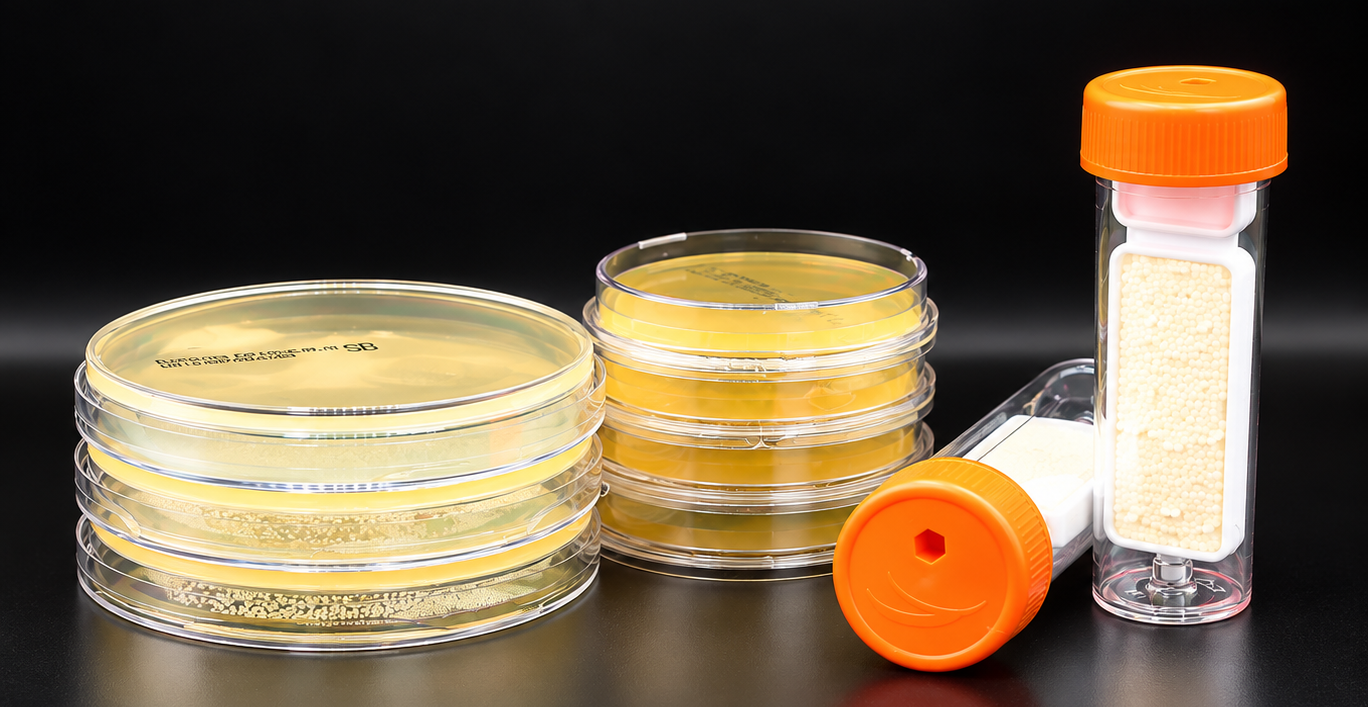
RODAC contact plates have a raised agar surface for direct contact with a sampled area. For air
monitoring, a 90 mm Petri dish can be used as a settle plate. Dipslides are particularly useful
when you need a practical indication of microbiological growth in water, process liquids or on
general surfaces without requiring a specific quantitative surface result. For small, curved or
difficult-to-reach areas, sterile swabs are usually the best option.
When should you choose dipslides?
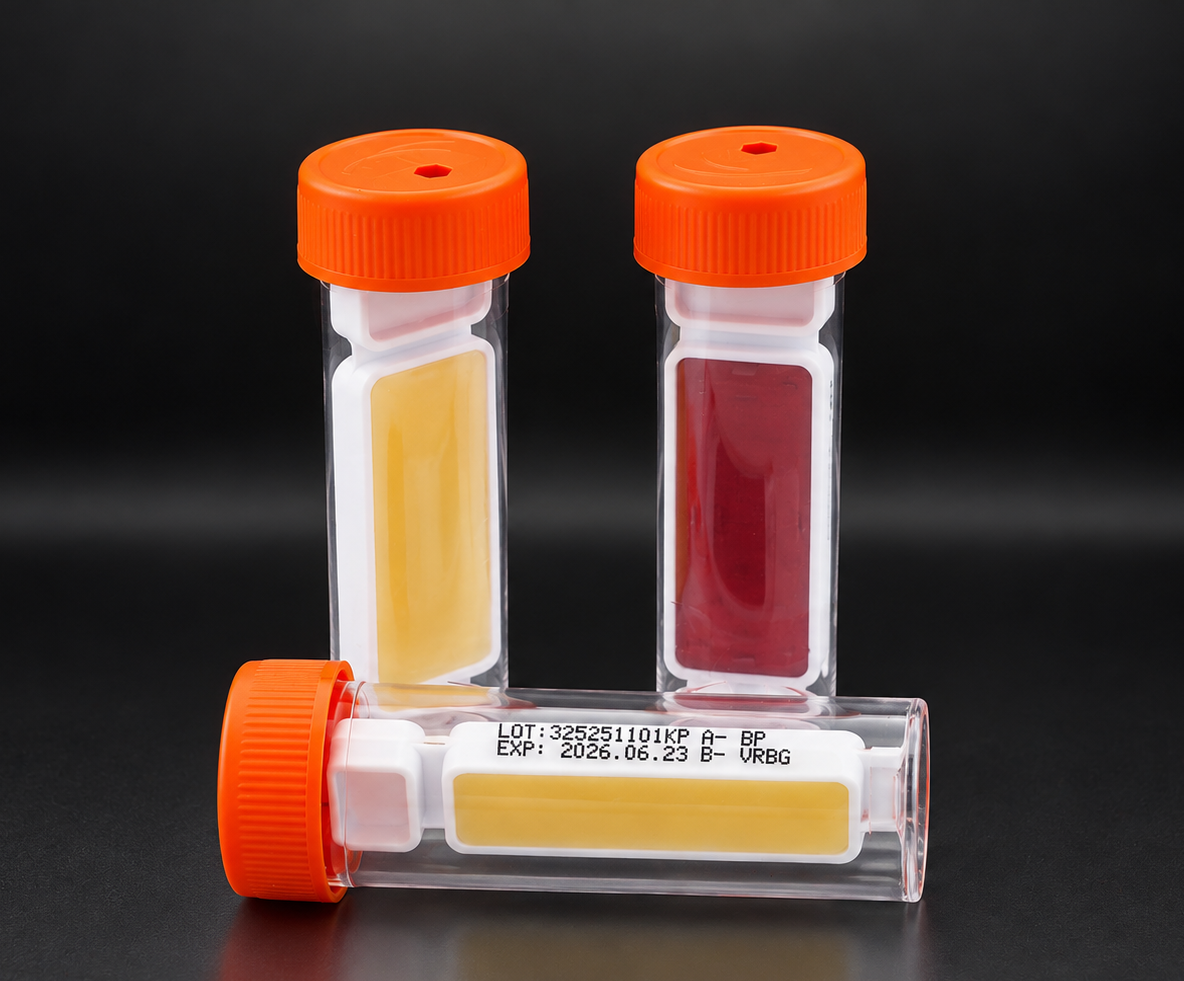
Dipslides are a practical option when you need a quick, practical indication of microbiological
growth in water, process fluids or on a surface. The slide is immersed in a liquid or pressed
against a surface, and growth is compared with a reference chart after incubation.
They are often suitable for water, cooling water, process water, lubricants, metalworking fluids
and periodic, indicative hygiene checks. A RODAC contact plate is better suited for direct
sampling of a flat, hard surface when you need a reproducible surface test and want to compare
results for defined sampling locations over time.
Not sure which method fits your situation?
View our dipslides or contact us for advice on the right monitoring method.
How to use RODAC contact plates
- Select the sampling locations in advance and record the date, time, location and type of plate used.
- Remove the lid without touching the agar, then press the raised agar surface gently and directly onto the area to be sampled. Do not slide the plate across the surface.
- Replace the lid and incubate the plate according to the instructions for the culture medium and your own procedure.
- After incubation, assess visible growth and count the colonies.
Results are usually recorded as CFU per plate, meaning colony-forming units. Always interpret the results in relation to earlier results, comparable sampling locations and the alert, action or acceptance limits in your own sampling plan.
CCD can help with incubators, practical instructions, training and support with result assessment.
For a more detailed explanation, see our step-by-step guide to microbiological monitoring with RODAC contact plates.
When are sterile swabs a better choice?
RODAC contact plates are ideal for flat, hard and accessible surfaces. Sterile swabs are often more suitable for small, curved, rough, wet, porous or difficult-to-reach areas. Typical examples include crevices, machine parts, pipes, screw threads, grooves and small product components.
RODAC contact plates and swabs are not competing methods. They are complementary tools in a well-designed sampling plan. CCD also supplies sterile swabs and can advise which method best suits each sampling point.
Order RODAC contact plates with practical support
You can order RODAC contact plates in boxes of 10, as a combined set or through periodic delivery arrangement. CCD can advise on the appropriate culture medium, quantities, storage, shelf life and practical implementation of your microbiological monitoring.
- Boxes of 10 plates, divided into two sealed packs of five
- TSA/PCA, VRBGA and BPA sets for textile and laundry hygiene monitoring
- Additional culture media and 90 mm Petri dishes available on request
- Periodic delivery available
- Incubators, RODAC plate holders and sterile swabs available
- Practical Microbiology training and external hygiene monitoring available
What are RODAC contact plates?
RODAC contact plates contain a raised agar surface. Press the agar gently onto a flat, hard surface to transfer any microorganisms present onto the culture medium. After incubation, the resulting colonies can be assessed and counted.
RODAC stands for Replicate Organism Detection and Counting. The plates are used for microbiological surface monitoring and for assessing cleaning, disinfection and hygiene in industrial laundries, hatcheries, cleanrooms, healthcare, laboratories and food production.
What is the difference between a RODAC contact plate and a Petri dish?
A RODAC contact plate has a raised agar surface for direct microbiological sampling of flat, hard and accessible surfaces.
A 90 mm Petri dish has a flat culture medium. It can be used for air monitoring as a settle plate, plating swab samples, liquid testing and other microbiological analyses. A RODAC contact plate is the appropriate format for making a direct contact impression on a surface.
Which surfaces can be sampled with RODAC contact plates?
RODAC contact plates work best on flat, hard, relatively smooth and accessible surfaces. Examples include textiles, work tables, machinery and equipment surfaces, conveyor belts, roll containers and other hygiene-critical contact points.
For crevices, curved areas, rough structures, small components, pipes and porous materials, sterile swabs or sponge sampling are often more suitable. The best method depends on the sampling location and your monitoring objective.
How long should a RODAC contact plate touch the surface?
Press the plate gently and straight onto the surface, without moving it during contact. The correct contact time should be defined in your own sampling procedure; approximately 10 seconds is often used as a practical starting point.
More important than any single result is sampling consistently each time. Consistent technique is essential if you want to compare results reliably over different monitoring rounds.
How should I incubate and read RODAC contact plates?
After sampling, incubate RODAC contact plates according to the instructions for the culture medium used and your own procedure. Incubation temperature and time depend on the medium and the purpose of the investigation.
After incubation, assess visible growth on the plate. The number of colonies is generally recorded as CFU per plate, meaning colony-forming units. Interpret results in relation to the culture medium, incubation conditions, sampled surface, time of sampling and your internal alert, action or acceptance limits.
For a more detailed practical work instruction, including sampling, incubation and interpretation steps, see Microbiological surface testing with RODAC Plates: A step-by-step guide for hygiene monitoring
Which RODAC contact plate do I need?
The appropriate culture medium depends on what you want to investigate PCA or TSA is used for the general assessment of total viable count. VRBGA targets Enterobacteriaceae, BPA targets Staphylococcus aureus, and YGC or Sabouraud Dextrose Agar is used for yeasts and moulds.
The choice also depends on your sector, sample type, the possible presence of cleaning or disinfectant residues and the requirements of your sampling plan. CCD can advise on suitable RODAC contact plates, additional culture media, sterile swabs or 90 mm Petri dishes.
Are RODAC contact plates suitable for cleanrooms?
Yes. RODAC contact plates are used for microbiological surface monitoring in cleanrooms and other controlled environments. They are suitable for flat, hard and accessible surfaces such as workbenches, equipment, doors, materials and relevant contact points.
Sampling locations, frequency, culture medium, incubation conditions and alert or action limits should match your environmental monitoring programme, risk assessment and internal quality procedures. Double-wrapped and, where appropriate, gamma-irradiated RODAC plates are practical where controlled handling is important.
Can RODAC contact plates be used in hatcheries?
Yes. RODAC contact plates are suitable for microbiological hygiene monitoring of flat, hard and accessible contact points in hatcheries. Examples include work tables, door handles, candling tables, egg trays, transport components and parts of hatching equipment.
Use predefined sampling locations, consistent sampling intervals and a practical sampling plan. This allows you to monitor the effect of cleaning and disinfection, identify deviations and compare results over time. Swabs or sponge sampling may be more suitable for rough, curved, wet or difficult-to-reach areas.
Do you supply other culture media and 90 mm Petri dishes?
Yes. In addition to standard RODAC contact plates, CCD can supply other culture media for microbiological monitoring on request. This may be necessary when you need to investigate specific groups of microorganisms, require selective or differential media, or need to account for possible cleaning and disinfectant residues.
We can also supply 90 mm Petri dishes with a suitable culture medium on request. They are used for air monitoring with settle plates, plating swab samples, liquid testing and other microbiological analyses. Availability, minimum order quantities, shelf life and delivery times vary by medium.
How are the RODAC contact plates packaged?
Our RODAC contact plates are supplied in boxes of 10, divided into two separately sealed packs of five. This means that you open only the plates required at that moment.
TSA, PCA, VRBGA and BPA plates are double-wrapped in foil. TSA and PCA plates are also gamma irradiated. This format is practical for cleanrooms, laboratories and other hygiene-critical environments where controlled handling matters.
What is the difference between RODAC contact plates and dipslides?
RODAC contact plates are designed for direct microbiological sampling of flat, hard and accessible surfaces. They are suitable when you work with fixed sampling locations and want to compare results from different monitoring rounds.
Dipslides are practical microbiological tests for a quick, indicative check of water, process liquids and surfaces. After incubation, you compare growth with a reference chart.
Use RODAC contact plates for a standardised contact impression on critical surfaces where a quantitative assessment is required. Choose dipslides when you mainly need a practical indication of microbiological growth in water, liquids or on general surfaces. View our dipslides for more information.
Can CCD help establish a microbiological hygiene monitoring programme?
Yes. In addition to supplying RODAC contact plates and culture media, CCD can help select sampling locations, create a practical sampling plan, supply incubators, provide instructions and training, and arrange periodic microbiological monitoring.
This means you can use RODAC contact plates for more than individual impressions. You can build a practical programme that identifies trends, verifies cleaning and disinfection, and supports more targeted investigation into deviations.
