Temperature Logger for Process Validation and Temperature Recording

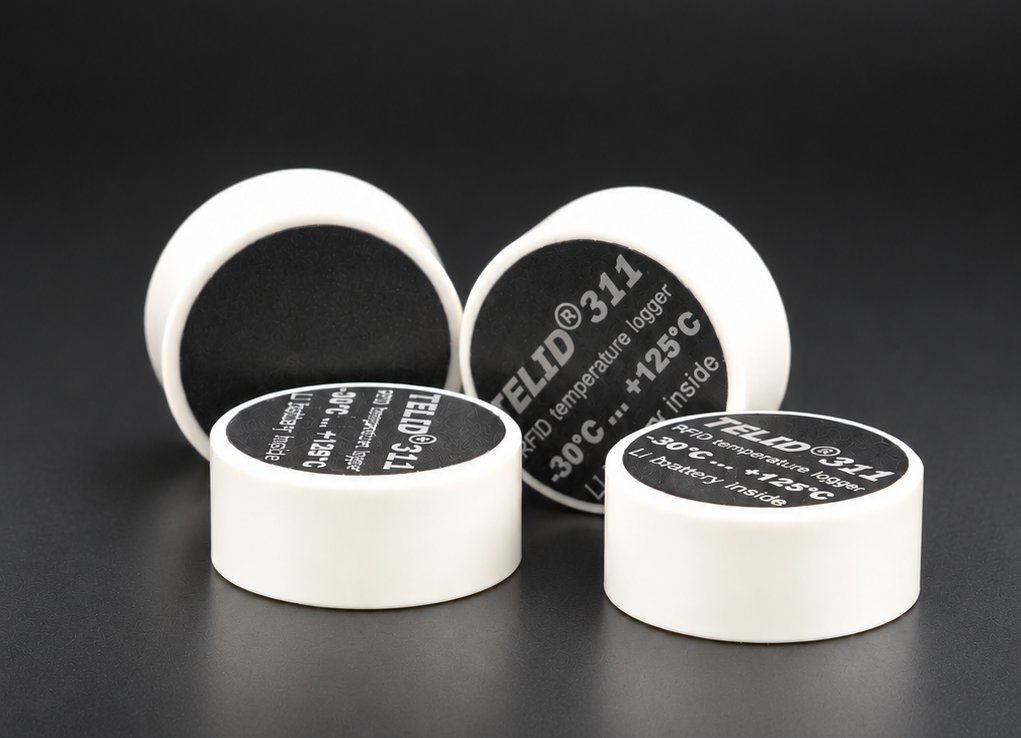
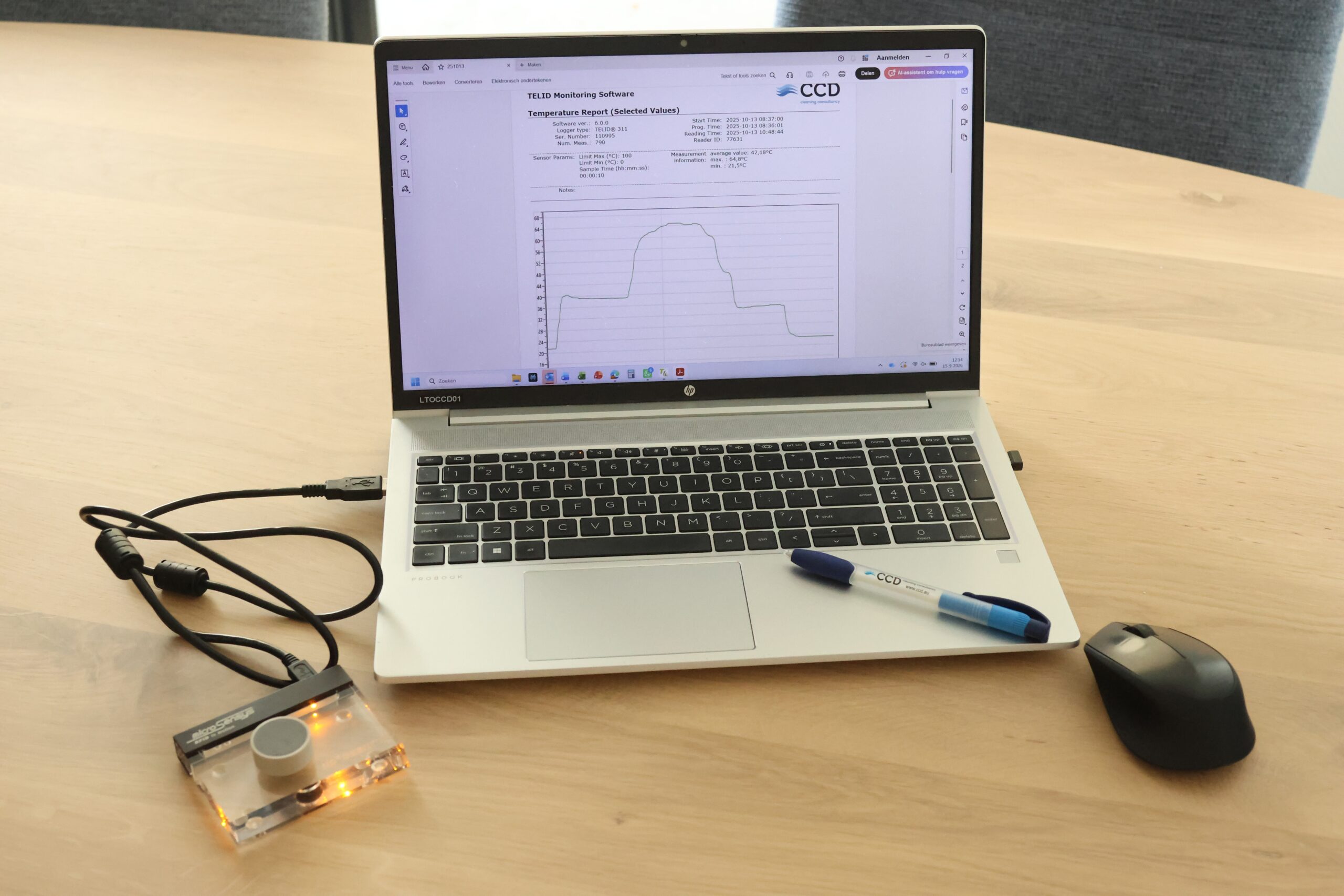
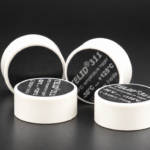
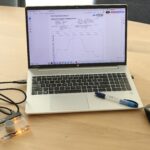
Measure and record the actual temperature in your washing, cleaning or sterilisation process. With a robust TELID® temperature logger, you can verify whether the required temperature is reached and maintained for long enough.
-
Measure at critical points
In machines, batches, water streams and other relevant measurement locations. -
Support process control
For verification, validation and investigation of deviations. -
Choose the right logger
CCD can advise you on the appropriate TELID® version and measurement setup.
Ask for advice on the right temperature logger for your application.
Op voorraad

ISO certification
ISO 9001:2015 certified

A unique position
Consulting firm in the Netherlands and Belgium

Founded in 1991
Industrial cleaning
Product description
Applications of a Temperature Logger
A temperature logger is suitable whenever the actual process temperature is more important than the set value or the temperature shown on a machine display. By running the logger through the process, you measure what happens at the relevant location.
A compact TELID® logger can be placed at critical locations within a machine, batch, product load or water stream, including locations where installing a separate thermometer is impractical. The suitability of a measurement location depends on the available space, required temperature range and process conditions.
Below are examples of applications for which CCD can advise on the right logger and measurement setup.
Professional laundries and textile care
Check whether your washing process reaches the required temperature and maintains it for long
enough. This is important for process control, thermal disinfection and situations in which the temperature must not become too high for delicate textiles.
Simply place the logger in the washing machine together with the laundry, directly between the textiles in a representative load. This allows you to measure the temperature to which the textiles are exposed, rather than relying solely on a water sample or the temperature indicated on the washing machine display. This makes the logger particularly suitable for comparing wash programmes, investigating temperature deviations and supporting changes to process settings.
For checking temperatures during drying processes, such as in tumble dryers and tunnel finishers, we recommend the TELID® 311.ac. It is resistant to temperatures of up to +140 °C.
Industrial cleaning and thermal disinfection
In industrial cleaning processes, temperature can be critical to cleaning performance, hygiene and repeatability. Examples include parts washers, cleaning installations, rinsing processes, thermal disinfection and processes in which objects need to reach a specific temperature.
You can measure in the process water, but also on or inside a representative product, component or test object. This helps you assess the temperature that the object itself reaches.
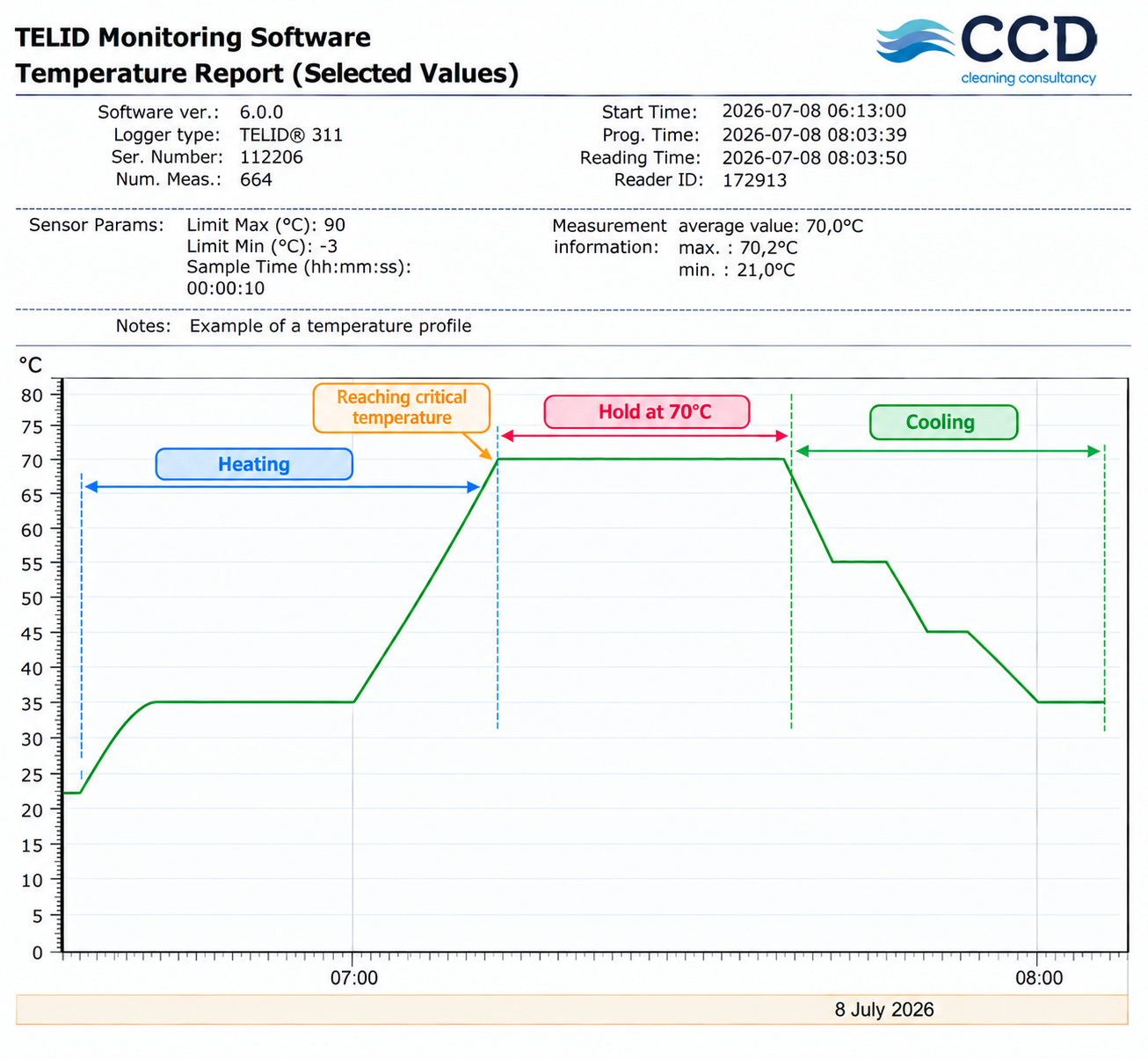
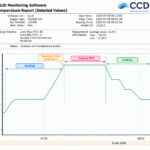
A temperature profile shows how quickly the process reaches temperature, what maximum temperature is achieved and how long the effective temperature phase lasts.
Autoclaves and steam sterilisation

During steam sterilisation, it is important to check whether the required temperature is reached inside the autoclave and in the parts of the load that are most difficult to heat. A temperature logger supports the monitoring and documentation of sterilisation cycles, for example for medical instruments, laboratory applications, clinical waste, packaging or production components.
The TELID® 311.ac is suitable for this application: it measures up to +140 °C and is pressure-resistant up to 3.6 bar.
Would you like additional information about the biological effectiveness of a sterilisation process, alongside temperature and time? You can supplement temperature recording with biological process control using the DES-controller. The right measurement and control setup depends on the application, load, sterilisation cycle and the requirements within your quality system.
Read more about the importance of biological indicators.
Food industry and thermal processes
In pasteurisation, heating, cooling and chilled storage, temperature recording is important to quality, product safety and process control. A logger can help visualise temperature profiles in a process, package, cold room, transport vehicle or product environment. Examples include checking heating and cooling curves, comparing product locations in a cold room, or recording temperature profiles during internal or external transport.
For applications with direct consequences for food safety, the measurement setup must always match the HACCP plan, process parameters and any legal or customer-specific requirements.
Water, wastewater and technical installations
In water and wastewater processes, temperature can affect biological activity, chemical reactions,
discharge requirements, energy consumption and process stability. Temperature recording can help
investigate temperature peaks, unusual discharges, seasonal effects or changes in a production
process.
A compact logger with an integrated sensor is mainly suitable for temporary measurements, process
investigations and verification. For permanent online monitoring, remote alarm notifications or
continuous process control, a fixed industrial sensor with data communication or process
automation is often more suitable.
CCD can advise on the right measurement method based on measurement location, temperature,
chemical exposure, required measurement duration and the need for alarms.
Which Temperature Logger Is Right for Your Process?
| Feature | TELID® 311 | TELID® 311.ac |
|---|---|---|
| Primary application | Laundries, industrial cleaning and general temperature recording | Autoclaves, steam sterilisation and processes with higher temperatures or pressure |
| Temperature range | −30 °C to +125 °C | Up to +140 °C |
| Pressure resistance | — | Up to 3.6 bar |
| Housing | Compact and IP67 water- and dust-resistant | Compact, IP67 water- and dust-resistant; stainless-steel housing with selected plastic components, suitable for high temperatures and autoclave applications |
| Measurement interval | Adjustable from 10 seconds to 59 minutes | Adjustable from 10 seconds to 59 minutes |
| Measurement accuracy | ≤ 0.5 °C from 0 °C to +60 °C; ≤ 2.0 °C above +60 °C |
≤ 0.5 °C from 0 °C to +60 °C; ≤ 2.0 °C above +60 °C |
| Resolution | ≤ 0.2 °C | ≤ 0.2 °C |
| Practical use | Add to a washing or cleaning process; also suitable for centrifuges, presses and shakers | Place in an autoclave or steriliser to record the temperature profile |
| Choose this logger when | Your process remains at or below +125 °C and requires water- and dust-resistance | Your process involves steam, pressure or temperatures above +125 °C |
| Less suitable when | Your process involves temperatures above +125 °C, steam or elevated pressure | You only need simple, permanent online monitoring with an alarm function |
Not sure whether you need the TELID® 311 or 311.ac?
Send us your process type, expected maximum temperature, process duration and preferred measurement setup. We will be happy to advise which logger is most suitable. If another logger, sensor or permanent measurement solution is a better fit, we can advise you on that as well.
Readout and use of measurement data
After the measurement, read out the recorded temperature data using the appropriate software. The resulting time-temperature profile can be reviewed for process verification, comparison of settings and investigation of deviations.
Depending on the software and configuration used, measurement data can be exported for further processing, documentation or inclusion in a quality file, for example as CSV, XML or a PDF graph.
Measure Temperature Where It Matters
A machine display usually shows a measured process value, or a set value, at one fixed location.
That value does not necessarily reflect the temperature reached by the product, textiles,
instrument or other process load.
By running a temperature logger through the process, you record a complete time-temperature
profile. This shows, among other things:
- How quickly the temperature rises.
- The maximum temperature that is actually reached.
- How long the critical temperature is maintained.
- Whether there are differences between programmes, loads, machines or measurement times.
- Whether a deviation is structural, incidental or developing over time.
Example from a washing process
A washing machine display may indicate a temperature of 70 °C, while the temperature in the centre of a full textile load may rise later or may not remain at the required temperature. By placing the logger in the washing machine together with the laundry, the resulting time-temperature graph shows whether the load reaches the desired temperature and how long that temperature is maintained.
This helps assess wash programmes, modified loads or settings, and deviations between measurement moments.
This makes the temperature logger suitable for verification, optimisation, trend analysis, fault investigation and supporting effective process control.
What is a temperature logger?
A temperature logger is a compact measuring instrument that automatically measures and stores temperature values. Instead of a single measurement with a thermometer, the logger records the temperature profile over a predefined period.
This allows you to see when a process reaches the required temperature, what maximum temperature is achieved and how long a critical temperature is maintained. A temperature logger is therefore suitable for process control, quality control, fault investigation and verification of temperature-sensitive processes.
What is the difference between a thermometer and a temperature logger?
A thermometer shows the temperature at the moment of measurement. A temperature logger automatically stores the temperature at set intervals, for example every 10 seconds or every minute.
A temperature logger therefore allows you to assess a complete time-temperature profile afterwards. This is important if you need to know not only whether a temperature was reached, but also whether it was maintained for long enough.
Why is the temperature shown on a machine display not always sufficient?
The temperature shown on a machine display is usually measured at one fixed location, for example in a water tank, pipe, outer drum, boiler or compartment. That temperature may differ from the temperature reached by the textiles, product, instrument or other process load.
By running a temperature logger through the process, you measure at the critical point. In a laundry, for example, you place the logger in the washing machine together with the textiles. This shows the temperature to which the textiles are exposed.
Can I use a temperature logger in a professional laundry?
Yes. A temperature logger is very suitable for checking temperatures in a washing process. You simply place it between the textiles in the washing machine. It allows you to compare wash programmes, investigate temperature deviations, verify modified settings, provide evidence that a required temperature is maintained long enough, or establish whether a cool-down phase is sufficiently gradual.
This is relevant for thermal disinfection, process control and quality control, but also when you want to prevent delicate textiles from being exposed to unnecessarily high temperatures. The TELID® 311 is suitable for temperatures from -30 °C to +125 °C.
Which temperature logger do I need: TELID® 311 or TELID® 311.ac?
The right version depends on the conditions in your process.
The TELID® 311 is suitable for laundries, industrial cleaning and general temperature recording in processes up to +125 °C. The logger is compact and IP67 water- and dust-resistant.
The TELID® 311.ac is intended for autoclaves, steam sterilisation and applications involving higher temperatures or pressure. This version measures up to +140 °C and is pressure-resistant up to 3.6 bar. Send us your process type, maximum temperature, process duration and preferred measurement setup, and we will advise which version is most suitable.
Can I use a temperature logger in an autoclave?
Yes, provided you use a version suitable for the temperature, pressure and moisture exposure of the autoclave cycle. The TELID® 311.ac is suitable for this application. It records temperatures up to +140 °C and is pressure-resistant up to 3.6 bar.
A logger helps to record the temperature profile inside the autoclave and in a representative or critical part of the load. When assessing a sterilisation process, temperature, time, pressure, load, measurement-point placement, steam quality and the requirements of your quality system must all be considered.
Is a temperature logger sufficient to validate a sterilisation process?
A temperature logger provides important information about the temperature profile achieved and the time for which a temperature is maintained. It therefore supports process control, verification and documentation of sterilisation cycles.
However, full validation of a sterilisation process may require additional elements, such as a validation protocol, multiple measurement points, assessment of the load, pressure recording, calibration of measuring equipment and, depending on the application, chemical or biological indicators. CCD can supplement temperature recording with biological process control using the DES-controller.
How often should a temperature logger measure?
The appropriate measurement interval depends on how quickly the temperature changes in your process and the level of detail you need to assess. A short measurement interval is desirable during rapid heating, washing, rinsing or sterilisation phases. A longer interval can be sufficient for slow and stable processes.
Set the interval in advance based on the process duration, expected temperature change and purpose of the measurement. An interval that is too long is not suitable for reliably assessing short critical temperature phases.
Can I read out and export the measurement data?
Yes. Data from the temperature logger is read using the accompanying RFID reader and software. You can review the measurement data as a time-temperature graph and export it as a CSV, XML or PDF graph.
This allows you to archive, compare and include the results in a quality file, or share them with colleagues, customers and technical staff.
Is the temperature logger suitable for water or wastewater?
For temporary temperature measurements, process investigations and verification in water and wastewater processes, a compact temperature logger can be a good solution. For example, you can investigate temperature peaks, temperature patterns during a discharge period, seasonal effects or changes after a process adjustment.
For permanent online monitoring, automatic alarms or direct connection to process control, a fixed industrial sensor with data communication is usually more suitable.
Where should I place the temperature logger?
Place the logger at the point where temperature is critical to your process. This may be:
- Between representative textiles in a washing machine
- In or on a representative product or component
- In the part of an autoclave load that is most difficult to heat
- In a package, transport vehicle or cold room
- In a water or wastewater stream during a temporary process measurement
The correct measurement location is often more important to the quality of the measurement than the type of logger alone.
